Lead and assessment
Capture customer context, site details, photos, measurements, and conditions before estimating work starts.
Loading
Opening this page.
The public story matches the product rule: every customer request should move through one connected chain instead of becoming disconnected website leads, office notes, field photos, and billing records.
Built for epoxy, polishing, coatings, and specialty surface contractors.
Operating chain
From inquiry to payment
Capture customer context, site details, photos, measurements, and conditions before estimating work starts.
Carry reviewed context into estimates, contracts, change orders, customer review, and project setup.
Keep schedule, jobs, field evidence, invoice readiness, payment status, and closeout connected.
Lead to payment
The workflow story is strongest when counts stay honest: total records, visible rows, ready work, blocked work, capped queues, and samples are different things.
Use route labels that explain whether a count is total, filtered, ready, blocked, or visible.
Route each next action to the owning workspace instead of creating a second task pile.
Let business actions move statuses forward, then show why the next step is ready or blocked.
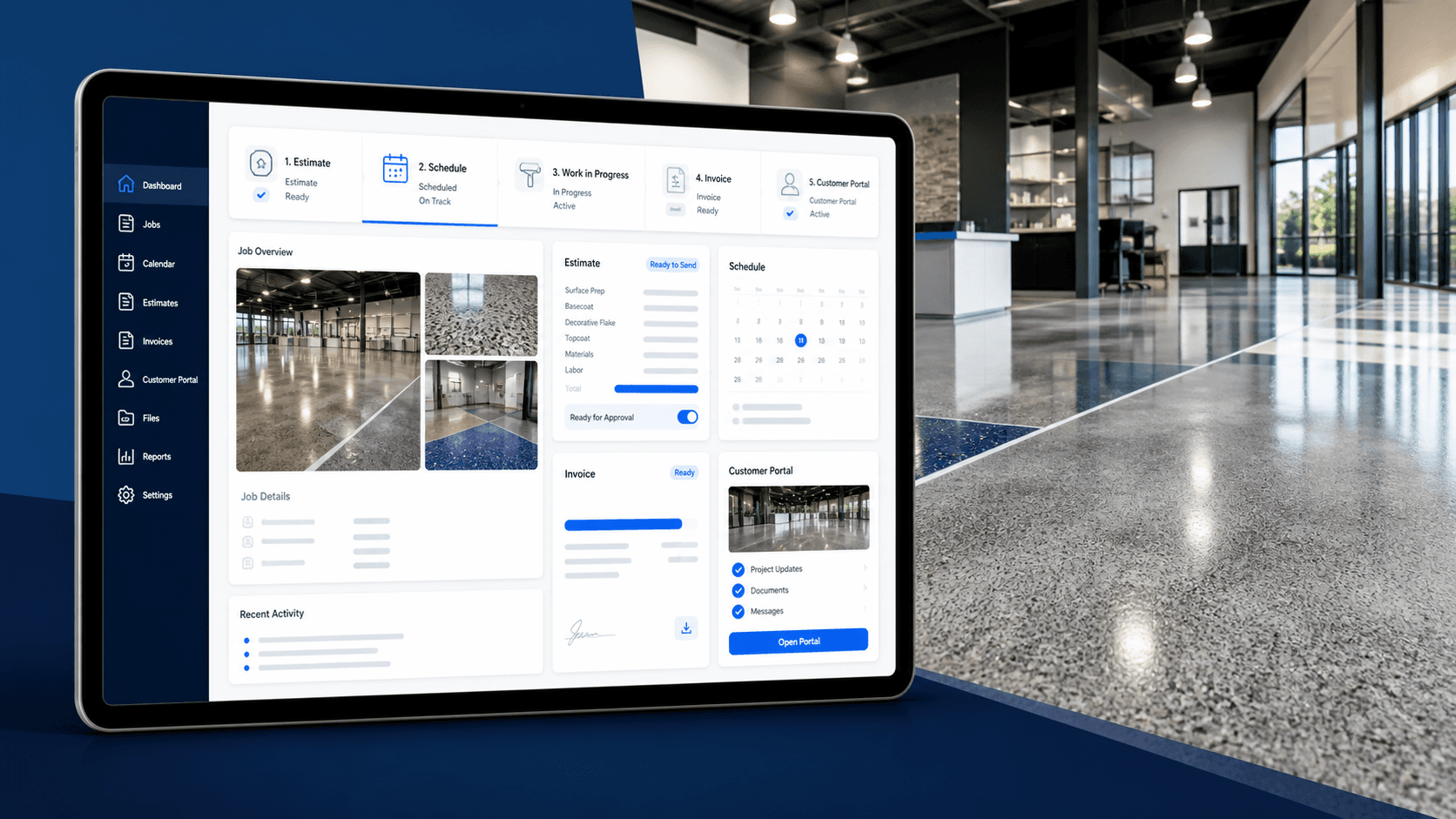
Marketing, contractor websites, protected contractor operations, and customer portal access are separate surfaces over one product foundation. That keeps public conversion from becoming duplicate operational truth.
Public quote and early-access capture stay server-validated.
Protected app and customer portal auth remain separate from marketing routes.
Contractor customer sites keep their own brand, colors, services, and customer-facing copy.
No public copy promises live provider execution, autonomous decisions, fake pricing, or unsupported customer claims.