Organization-aware auth
Protected contractor routes use authenticated sessions, active organization context, module access checks, and role-aware boundaries.
Loading
Opening this page.
FloorConnector’s public trust story should be accurate: authenticated contractor access, organization-aware permissions, scoped portal grants, protected routes, and server-side validation are the current posture.
Built for epoxy, polishing, coatings, and specialty surface contractors.
Operating chain
From inquiry to payment
Protected contractor routes use authenticated sessions, active organization context, module access checks, and role-aware boundaries.
Customer portal surfaces depend on portal grants and project access rather than broad public visibility.
Live sends, provider execution, payments, DNS, migrations, and production changes remain approval-gated.
Trust boundary
FloorConnector earns confidence by showing separation between public routes, protected app work, customer portal access, and owner-gated provider actions.
Public pages do not expose protected tenant data.
Customer portal visibility depends on identity, grants, and project-scoped access.
DNS, deploys, provider execution, payments, and live sends remain explicit owner-gated steps.
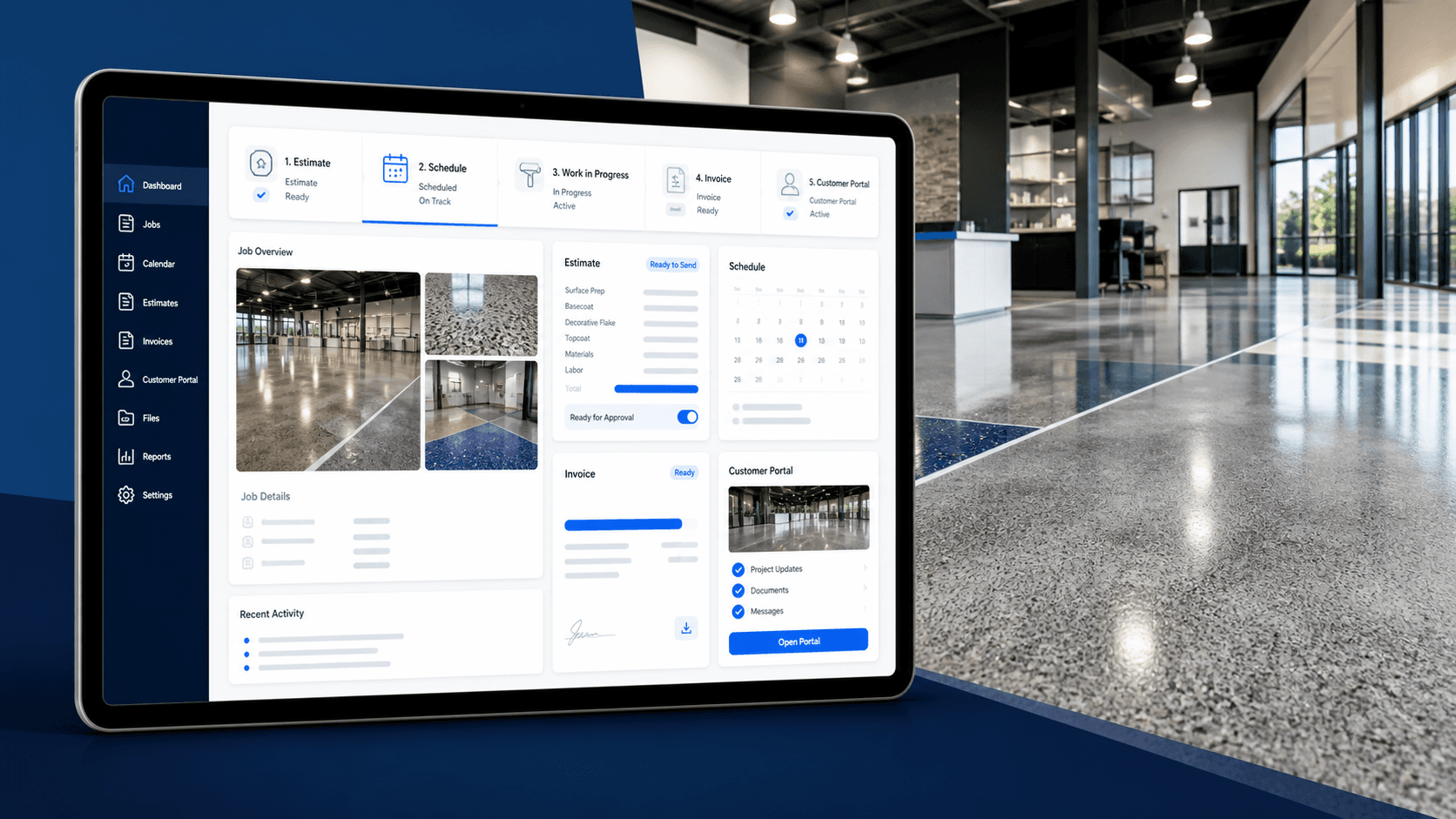
Marketing, contractor websites, protected contractor operations, and customer portal access are separate surfaces over one product foundation. That keeps public conversion from becoming duplicate operational truth.
Public quote and early-access capture stay server-validated.
Protected app and customer portal auth remain separate from marketing routes.
Contractor customer sites keep their own brand, colors, services, and customer-facing copy.
No public copy promises live provider execution, autonomous decisions, fake pricing, or unsupported customer claims.